
Viewing Angle Guide
Viewing angle directly affects how audiences experience LED displays from different positions.
This becomes especially important in:
- conference rooms
- churches
- stadiums
- exhibitions
- retail environments
where viewers are distributed across wide areas.
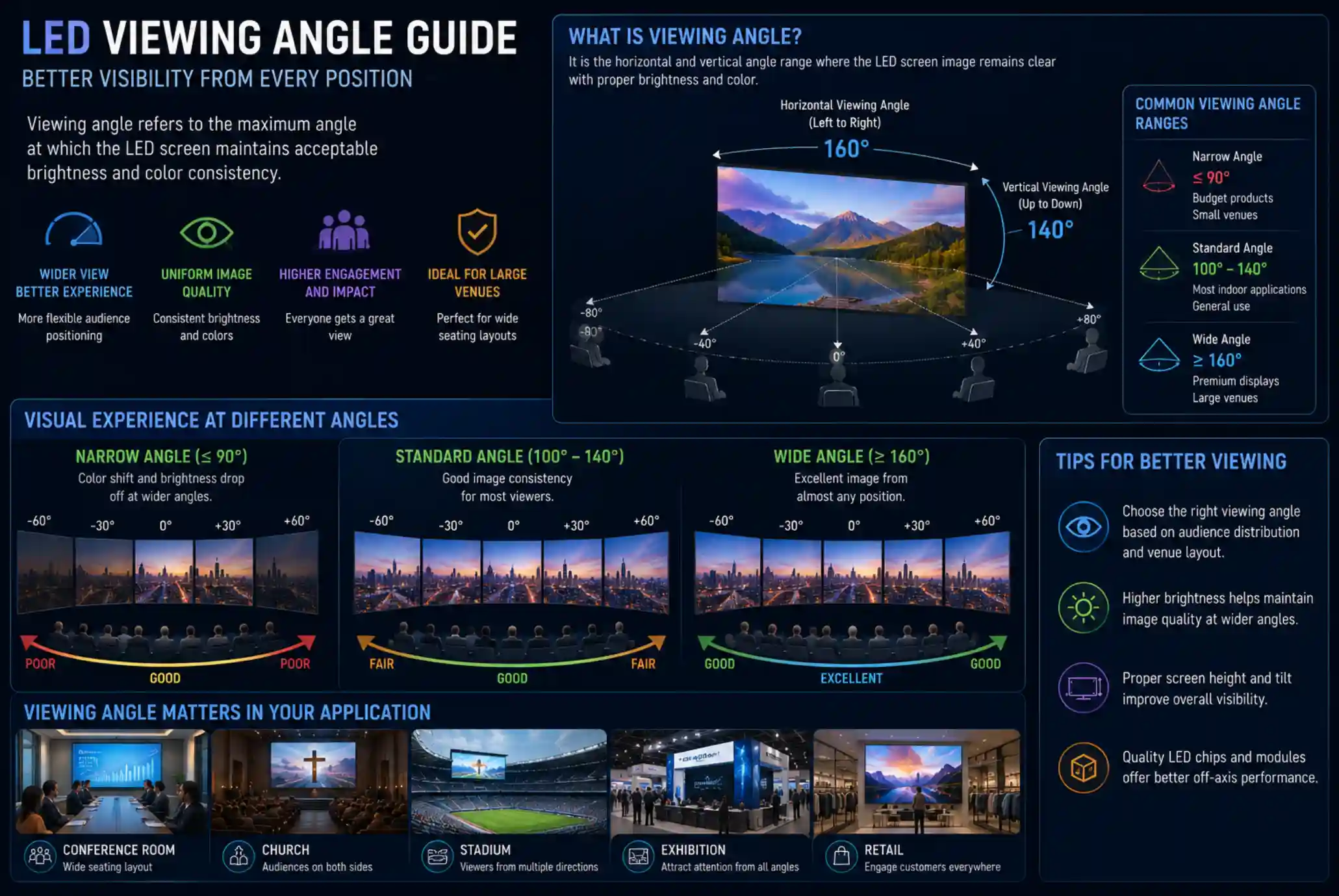
What Is Viewing Angle?
Viewing angle refers to the maximum angle at which viewers can still clearly see accurate:
- brightness
- colors
- contrast
- image quality
Typical LED viewing angles:
Direction
Typical Angle
Horizontal
140°–170°
Vertical
120°–160°
Why Viewing Angle Matters in Real Projects
In narrow viewing environments, almost any screen may appear acceptable.
However, in large public spaces, poor viewing angle can cause:
- brightness loss
- color shifting
- inconsistent visuals
This becomes very noticeable in:
- churches
- stadiums
- conference halls
- exhibition centers
Different LED Technologies Affect Viewing Angle
Fine-pitch SMD and COB displays usually provide wider viewing angles.
Older DIP outdoor displays often have narrower viewing angles but stronger brightness.
This is why modern retail and XR projects usually prefer:
- SMD
- COB
- MIP
rather than traditional DIP solutions.
DDW Engineer Notes
In many retail projects, customers often stand at side angles while walking through shopping malls.
This is why wide viewing angle becomes very important for maintaining premium visual consistency.
For sports stadiums and churches, audience distribution is even wider, making viewing angle one of the key design considerations.