
Screen Size Calculato
One of the biggest differences between LED displays and LCD displays is flexibility.
LED screens can be customized into almost any size.
However, determining the correct screen size is not simply about making the screen as large as possible.
The 3 Core Factors for Screen Size Design
- Viewing Distance
The farther the audience sits, the larger the screen generally needs to be.
- Installation Environment
The available wall space, ceiling height, and structural conditions all influence final screen size.
- Content Type
Presentation-heavy projects often require:
- wider aspect ratio
- better readability
Advertising projects may prioritize:
- visual impact
- immersive scale
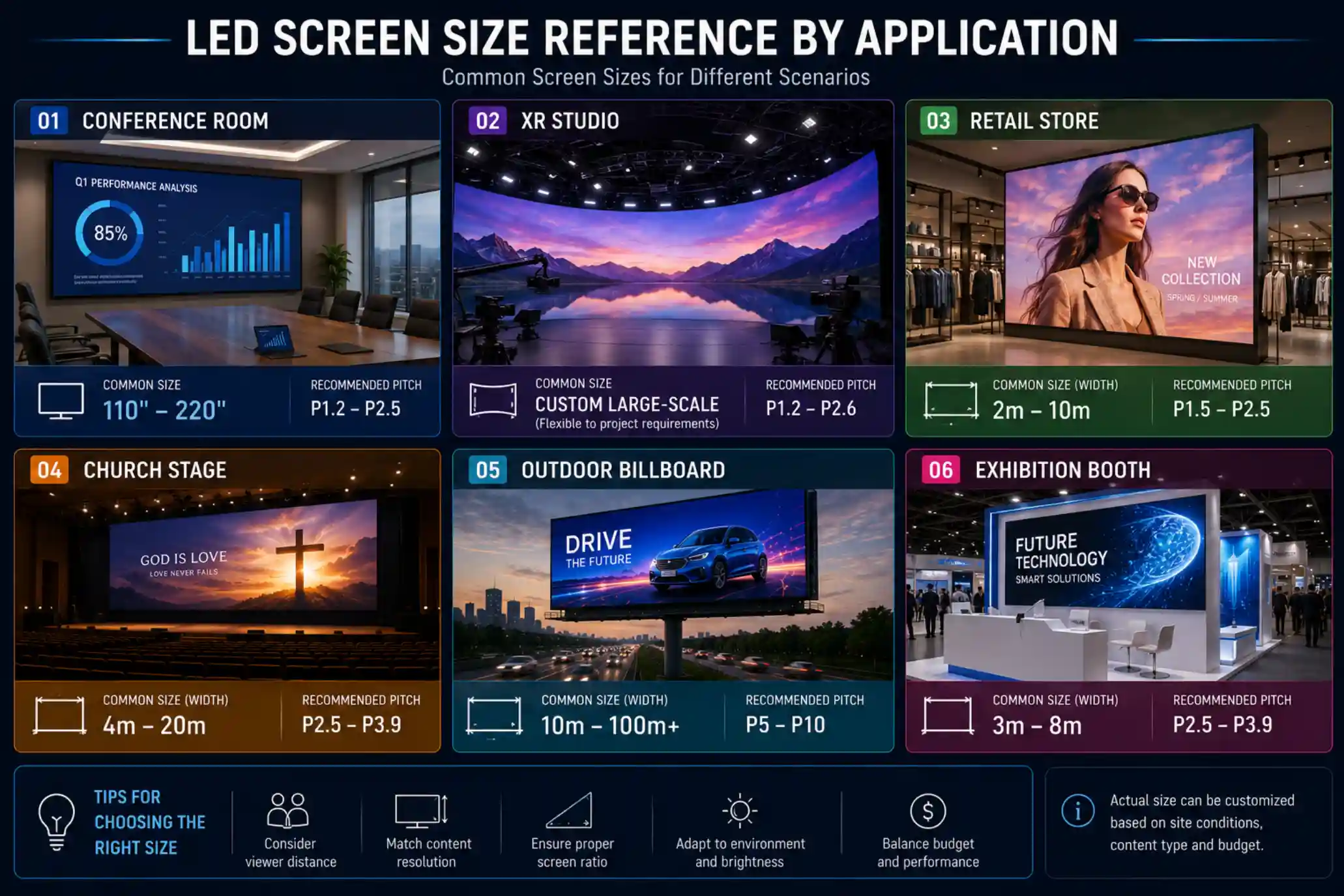
Typical Screen Size Recommendations
Application | Common Screen Size |
Conference Room | 110″–220″ |
XR Studio | Custom large-scale |
Retail Store | 2m–10m width |
Church Stage | 4m–20m width |
Outdoor Billboard | 10m–100m+ |
Exhibition Booth | 3m–8m width |
Bigger Is Not Always Better
Oversized LED screens can sometimes create:
- uncomfortable viewing angles
- excessive brightness
- visual fatigue
- wasted budget
This is especially common in small conference rooms.
Proper screen proportion is often more important than extreme size.
DDW Engineer Notes
In many premium commercial projects, screen proportion and installation integration are more important than pure size.
For example:
Luxury retail stores usually prefer visually elegant integration rather than oversized screens.
Meanwhile, outdoor advertising projects often prioritize maximum visual impact.