
Smart City Displays
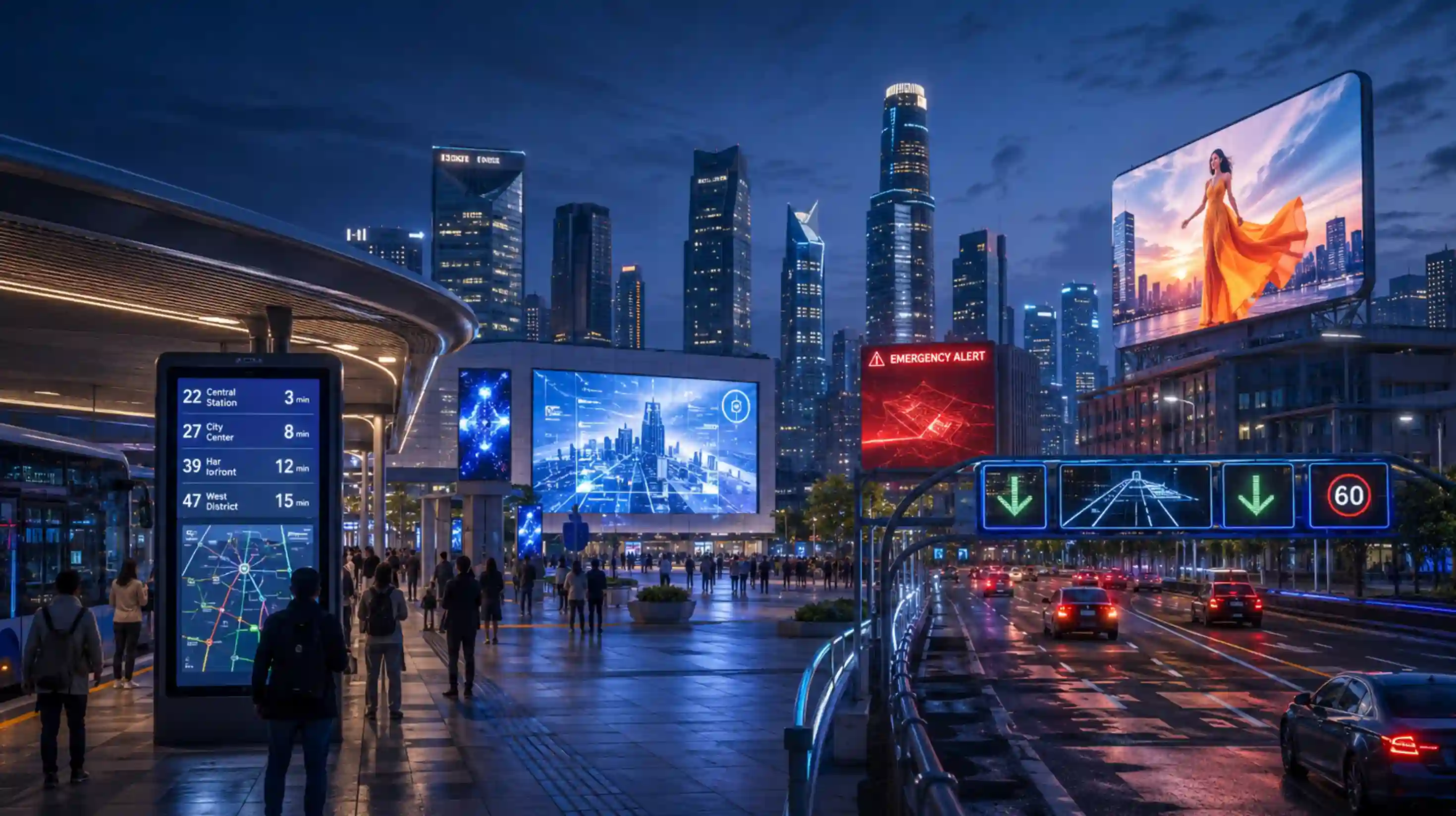
Smart city infrastructure is rapidly increasing demand for large-scale LED visualization systems worldwide.
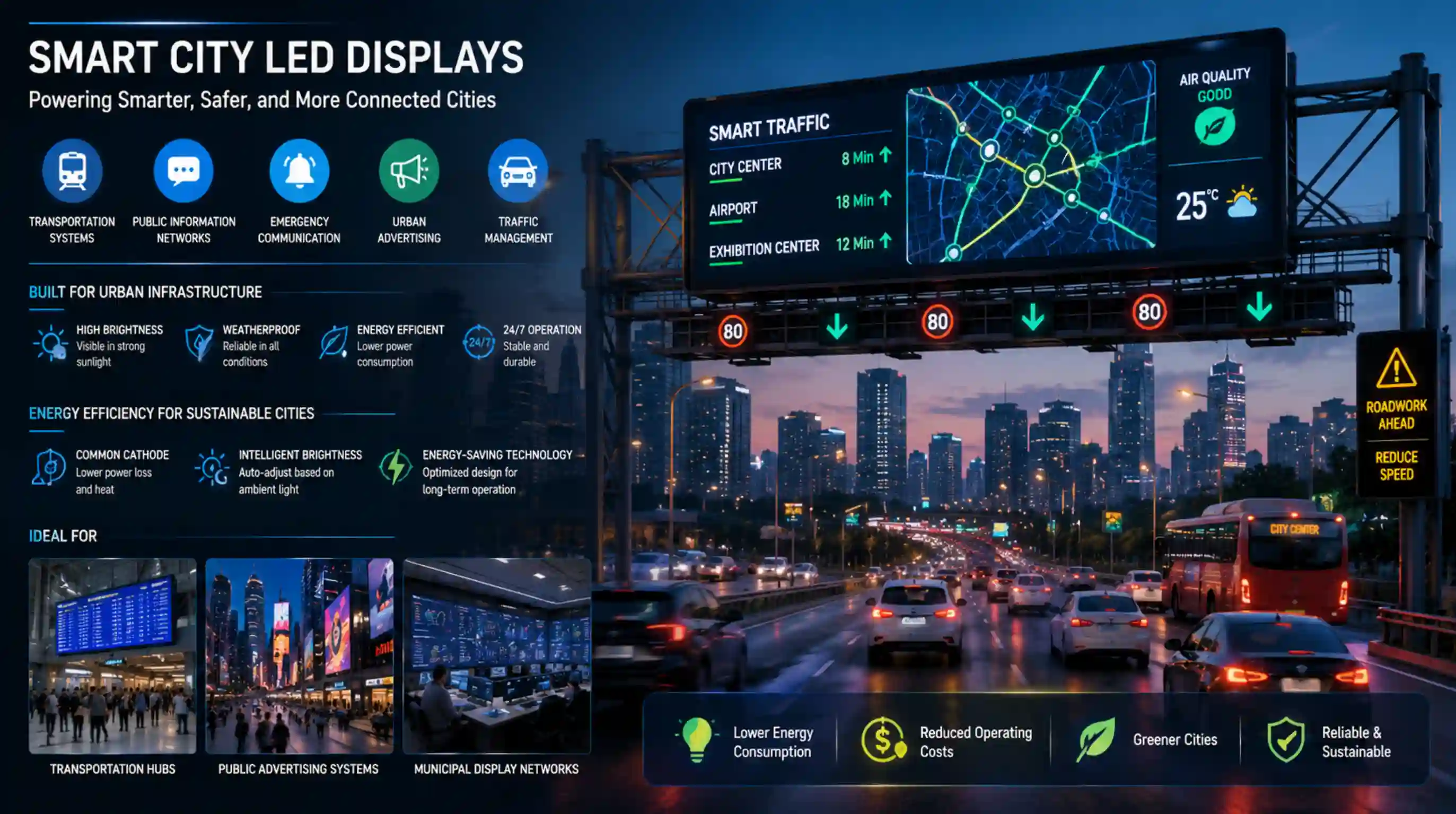
LED displays are becoming important components of:
- transportation systems
- public information networks
- emergency communication
- urban advertising
traffic management
Why Cities Are Becoming More Digital
Modern urban environments increasingly require:
- real-time information
- dynamic communication
- intelligent traffic systems
- public safety integration
LED displays provide high visibility and flexible content management for these applications.
Why Reliability Is Critical in Smart City Projects
Unlike temporary commercial displays, smart city systems often operate:
- 24/7
- outdoors
- under harsh environmental conditions
This creates high requirements for:
- thermal stability
- waterproofing
- signal reliability
- maintenance efficiency
Why Energy Efficiency Matters More in Urban Projects
Large citywide LED networks may consume significant energy over long operating periods.
This is why governments increasingly prioritize:
- common cathode systems
- intelligent brightness adjustment
- energy-saving LED technologies
especially in:
- transportation hubs
- public advertising systems
- municipal display networks
DDW Engineer Notes
Smart city projects are not simply LED installations.
They are long-term infrastructure systems requiring coordination between:
- display engineering
- electrical systems
- communication networks
- environmental management
- maintenance logistics
Long-term operational stability is usually more important than aggressive specifications.