
LED for Church
Church LED projects are very different from standard commercial installations.
In many worship environments, LED systems must balance:
- visual clarity
- viewing comfort
- long operating hours
- camera compatibility
- architectural harmony
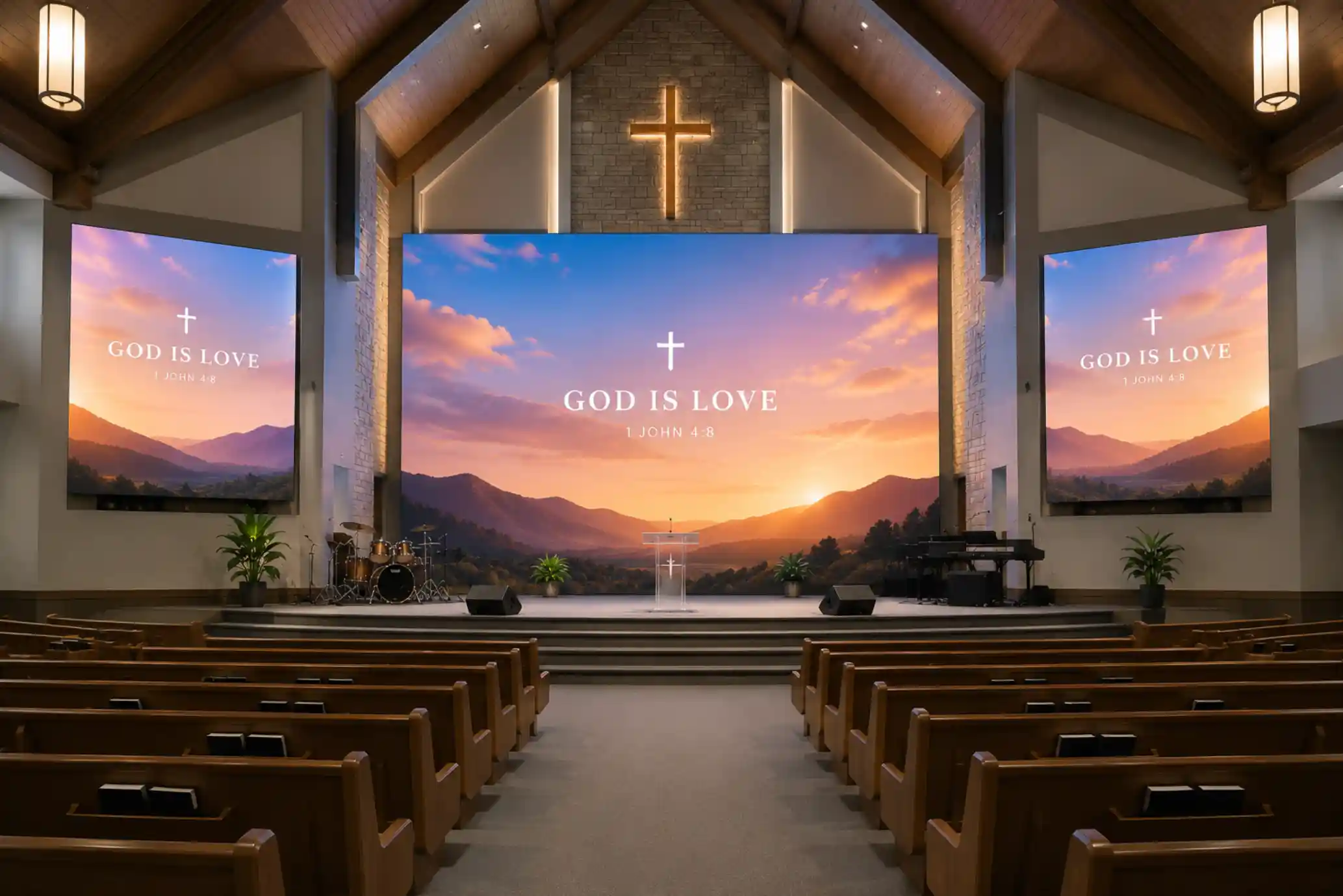
Why Church Viewing Conditions Are Unique
Church audiences are usually distributed across very wide seating areas.
This creates several challenges:
- large viewing angles
- varying viewing distances
- ambient lighting differences
This is why church LED projects usually prioritize:
- wide viewing angle
- stable brightness
- visual comfort
- natural color rendering
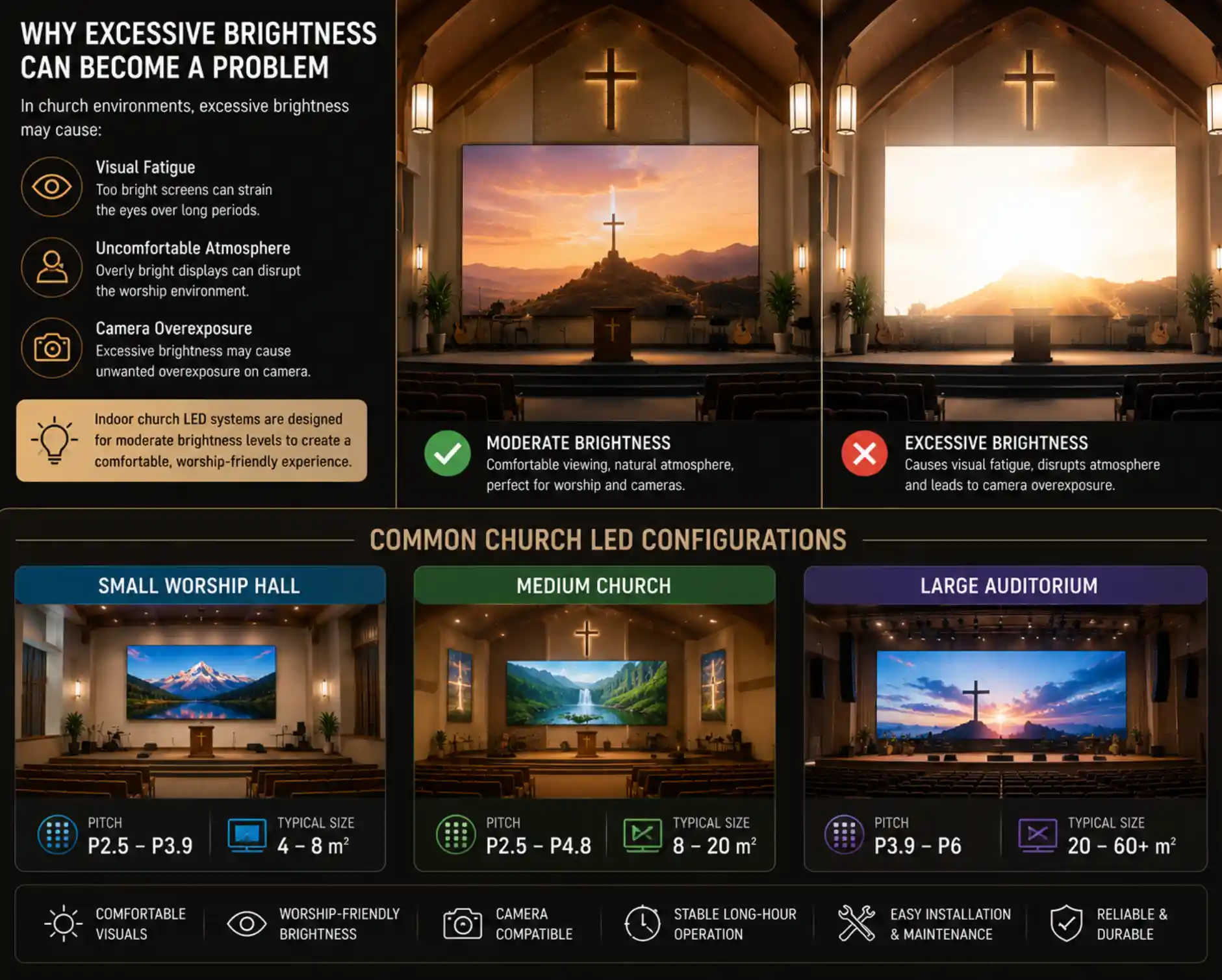
Why Excessive Brightness Can Become a Problem
Many first-time buyers assume higher brightness is always better.
In church environments, however, excessive brightness may cause:
- visual fatigue
- uncomfortable worship atmosphere
- camera overexposure
This is why indoor church LED systems usually operate with moderate brightness levels.
Common Church LED Configurations
Church Type | Recommended Pitch |
Small Worship Hall | P2.5–P3.9 |
Medium Church | P2.5–P4.8 |
Large Auditorium | P3.9–P6 |
Why Camera Compatibility Matters
Modern churches increasingly use:
- live streaming
- online worship
- broadcast recording
- hybrid events
This requires LED systems with:
- high refresh rate
- stable grayscale
- reduced flickering
DDW Engineer Notes
In church projects, image softness and viewing comfort are often more important than extremely aggressive visual performance.
Many successful worship environments prioritize:
- natural presentation
- balanced brightness
- audience comfort
- long-term reliability
rather than ultra-high specifications.