
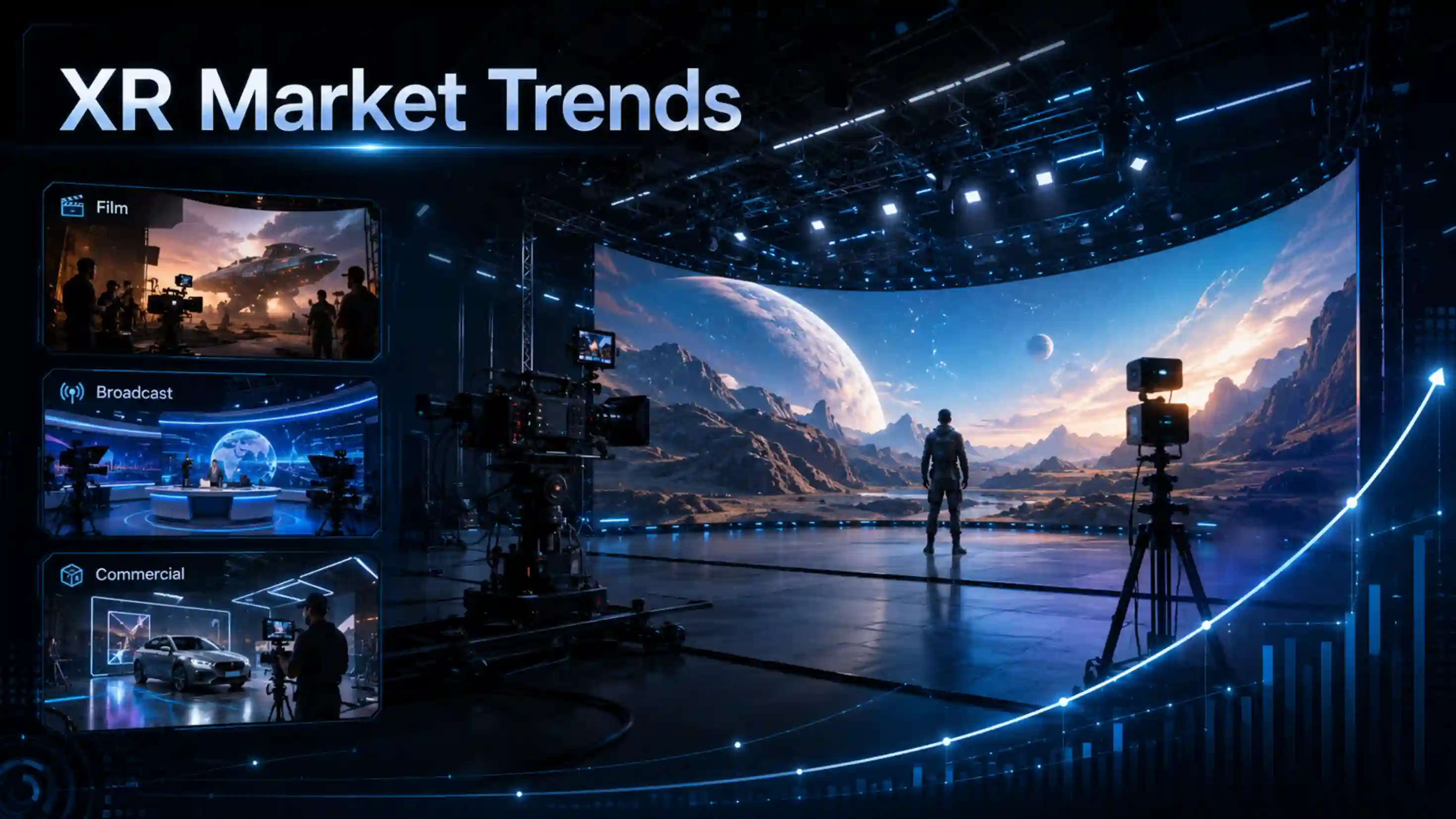
XR Market Trends
XR virtual production is rapidly transforming the global film, broadcast, and commercial content industries.
LED displays are now becoming core infrastructure inside modern virtual production studios.
Why XR Is Growing So Quickly
Traditional green screen production often creates challenges such as:
- unrealistic lighting interaction
- long post-production workflow
- difficult reflections
- inefficient shooting environments
XR LED stages help solve many of these problems through:
- real-time rendering
- live environment visualization
- realistic reflections
camera tracking integration
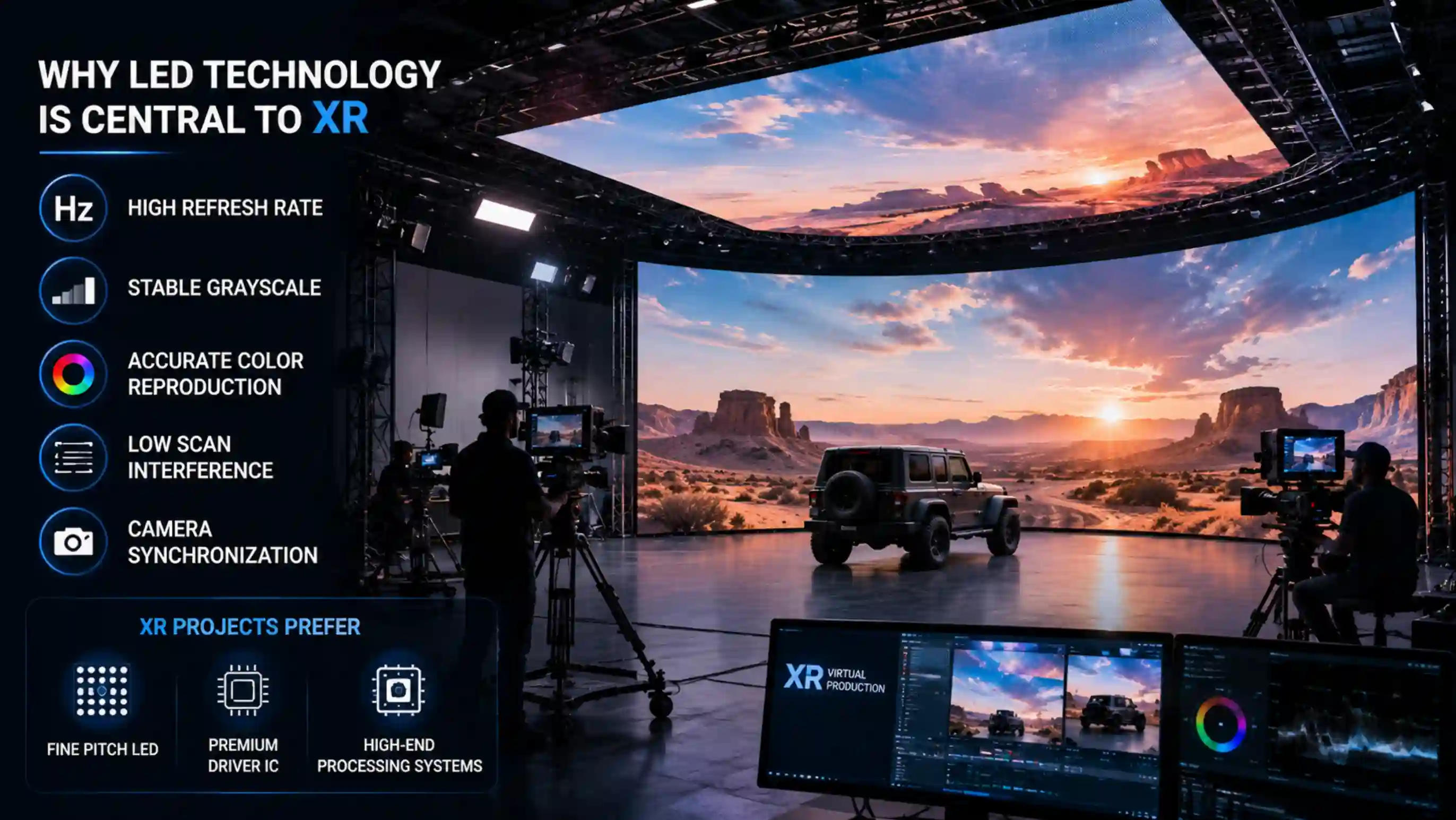
Why LED Technology Is Central to XR
Unlike traditional backgrounds, XR environments require LED systems capable of:
- high refresh rate
- stable grayscale
- accurate color reproduction
- low scan interference
- camera synchronization
This is why XR projects usually prefer:
- fine pitch LED
- premium driver IC
- high-end processing systems
Why Automotive and Luxury Brands Are Investing in XR
Many premium brands now use XR for:
- automotive commercials
- luxury product launches
- virtual advertising
- cinematic brand campaigns
XR reduces production complexity while creating more flexible visual environments.
This trend is growing rapidly in:
- North America
- Europe
- South Korea
Middle East media hubs
Why Smaller XR Studios Are Becoming Popular
Many customers initially imagine XR as giant Hollywood-scale productions.
However, compact XR studios are now growing rapidly for:
- livestream commerce
- product marketing
- virtual events
- online education
- corporate broadcasting
This significantly expands future LED demand.
DDW Engineer Notes
Many customers still evaluate XR displays using traditional rental LED logic.
In reality, XR environments are much closer to professional cinema systems than standard event displays.
The future of XR depends not only on LED hardware, but on complete integration between:
- LED systems
- rendering engines
- camera systems
- lighting environments
- content workflow