
Wall-mounted LED displays are widely used in:
- conference rooms
- retail stores
- corporate lobbies
- command centers
- churches
- luxury showrooms
Compared with rental installations, wall-mounted systems usually focus more on:
- space efficiency
- clean appearance
- long-term stability
- maintenance accessibility
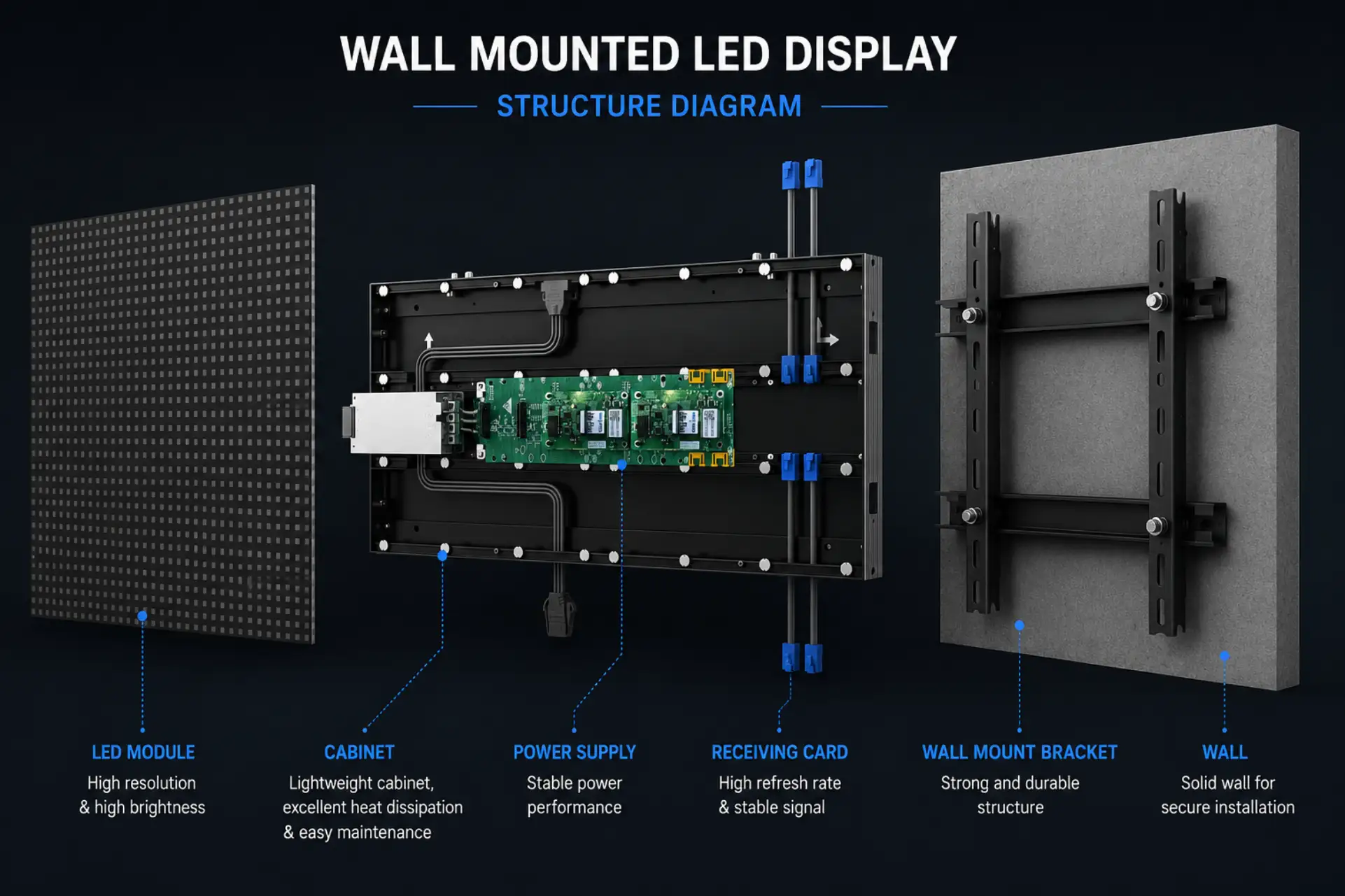
Why Wall Structure Matters More Than Many Customers Expect
Many customers focus mainly on screen size and pixel pitch.
However, in real projects, wall structure often becomes one of the biggest engineering challenges.
Especially for:
- concrete walls
- drywall structures
- glass walls
- decorative interiors
Poor wall support may eventually cause:
- cabinet deformation
- alignment issues
- vibration
- long-term structural instability
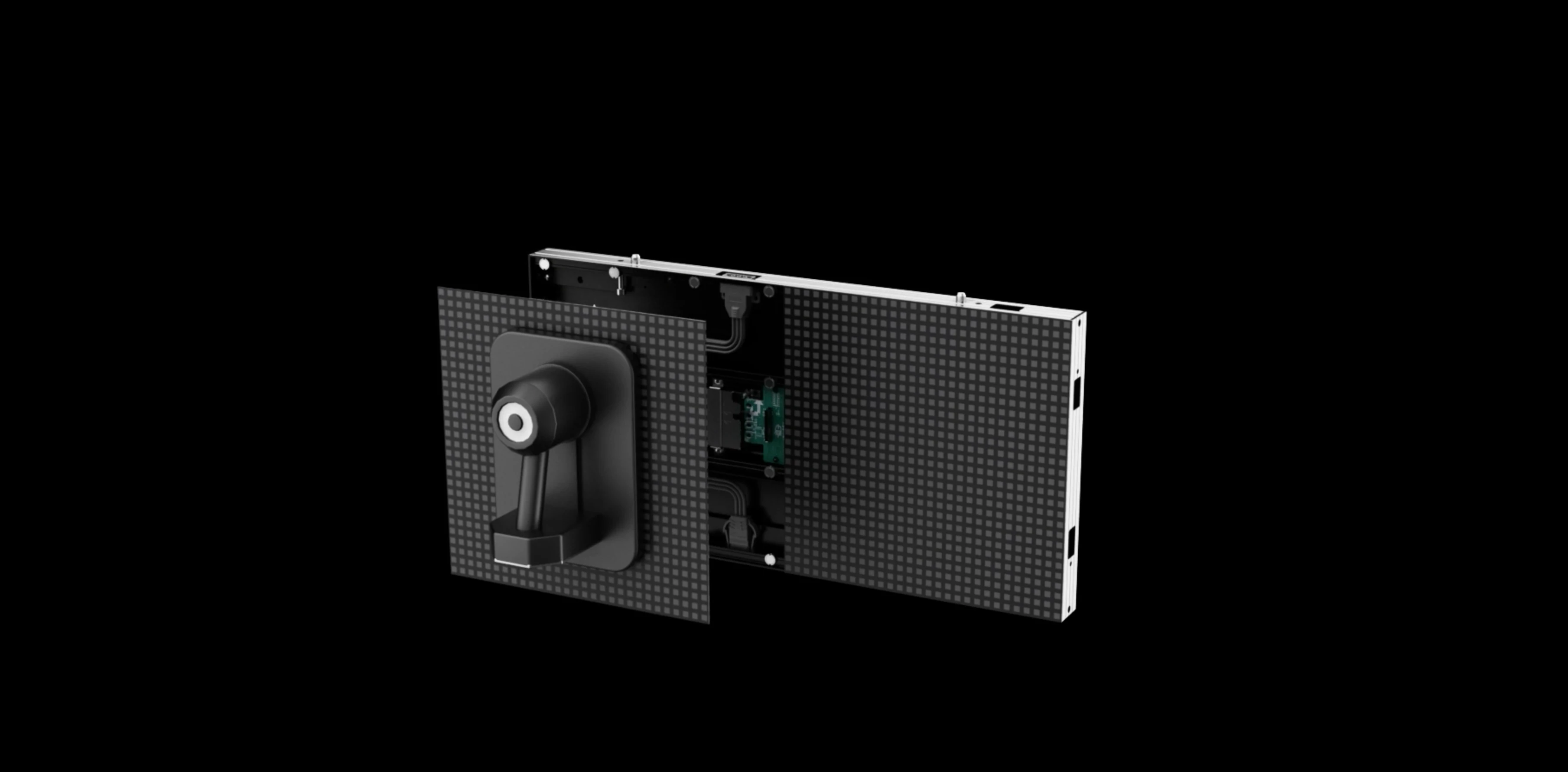
Why Front Maintenance Is Becoming Mainstream
In many indoor commercial environments, there is very limited rear maintenance space.
This is why modern wall-mounted LED systems increasingly use:
- front service modules
- magnetic maintenance
- vacuum maintenance tools
Especially in:
- luxury retail stores
- corporate boardrooms
- museums
- shopping malls
rear maintenance access is often impossible.
Why Flatness Directly Affects Premium Appearance
In close-viewing environments, even small cabinet misalignment becomes very visible.
This is especially critical in:
- fine-pitch conference rooms
- luxury retail spaces
- broadcast studios
- XR environments
This is why premium wall-mounted systems usually require:
- precision cabinet structure
- accurate installation leveling
- stable mounting systems
DDW Engineer Notes
Many indoor LED projects initially look excellent after installation.
However, poor structural support may slowly create alignment problems after months of operation.
In premium indoor environments, installation precision is often just as important as image quality itself.