
How to Choose Pixel Pitch
Many customers ask:
“Which pixel pitch should I choose?”
In reality, there is no universal answer.
The correct pixel pitch depends on the entire project environment, not just the screen itself.
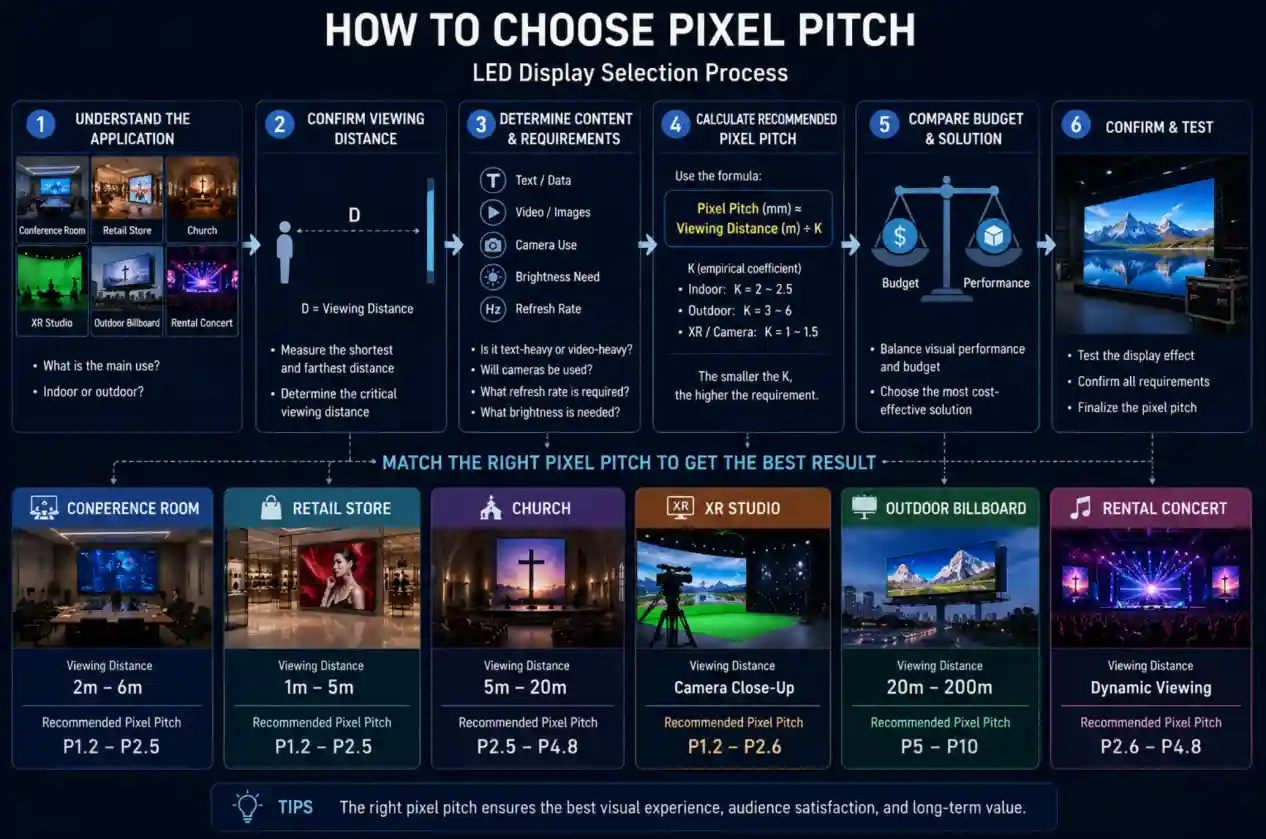
The 5 Most Important Factors
- Viewing Distance
This is usually the first factor engineers evaluate.
Closer viewing requires smaller pitch.
- Indoor or Outdoor
Indoor projects usually use:
- 9–P3.9
Outdoor projects usually use:
- 9–P10
Outdoor environments prioritize:
- brightness
- waterproofing
- viewing distance
- Content Type
Text-heavy content requires finer pitch.
Examples:
- financial data
- conference presentations
- command center dashboards
Video-focused applications can often tolerate larger pitch.
Examples:
- concerts
- outdoor advertising
- sports events
- Camera Usage
Projects involving:
- XR
- broadcast
- virtual production
- live streaming
usually require finer pitch and higher refresh rate.
- Budget Balance
Ultra-fine pitch significantly increases:
- LED cost
- control system cost
- installation complexity
- maintenance difficulty
The goal is not choosing the smallest pitch.
The goal is choosing the most suitable pitch.
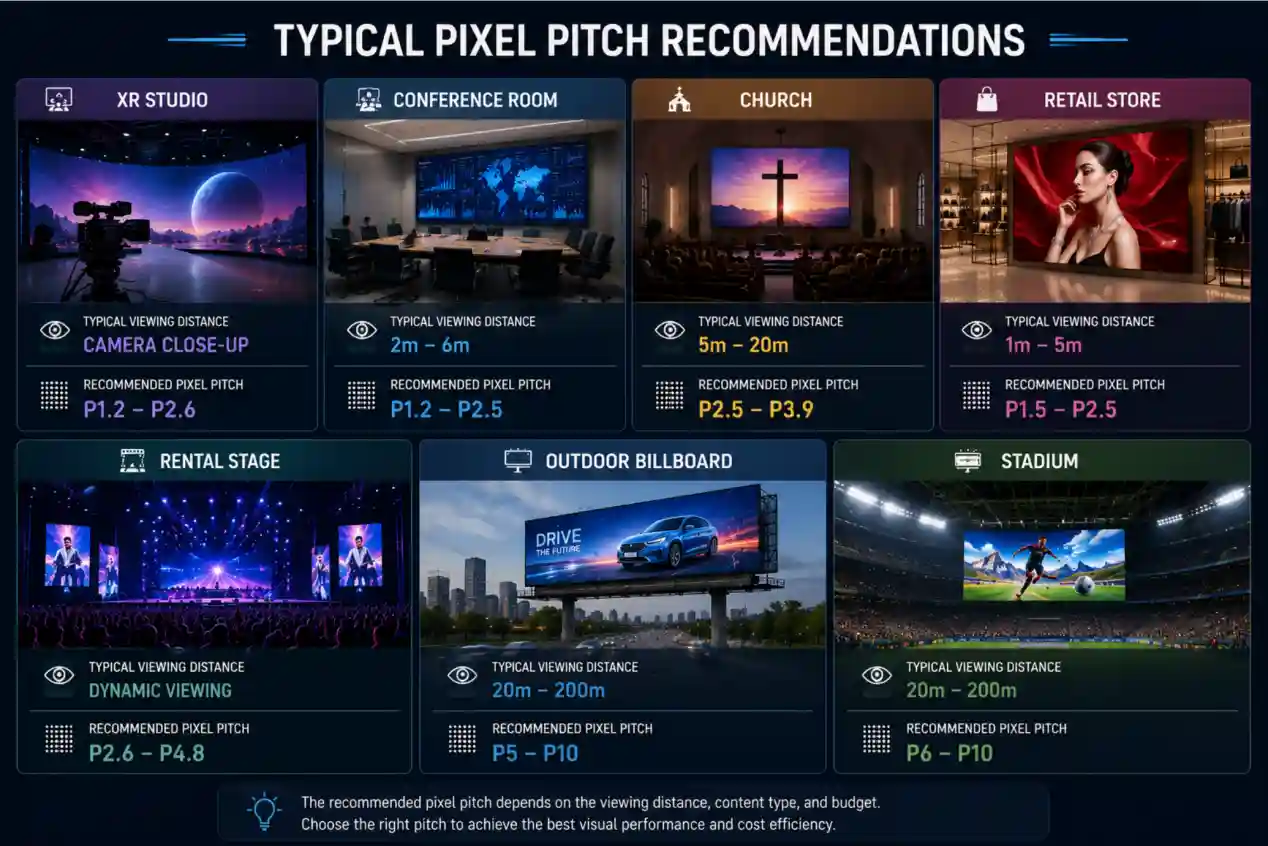
Typical Pixel Pitch Recommendations
Application | Recommended Pitch |
XR Studio | P1.2–P2.6 |
Conference Room | P1.2–P2.5 |
Church | P2.5–P3.9 |
Retail Store | P1.5–P2.5 |
Rental Stage | P2.6–P4.8 |
Outdoor Billboard | P5–P10 |
Stadium | P6–P10 |
DDW Engineer Notes
In many high-end projects, customers initially choose pitch based only on online specifications.
However, experienced system integrators usually evaluate:
- audience movement
- content type
- ambient light
- camera distance
- installation conditions
- future maintenance
Pixel pitch selection is an engineering decision, not only a specification comparison.