
Indoor and outdoor LED systems follow completely different engineering logic.
Many first-time buyers underestimate how different these two environments actually are.
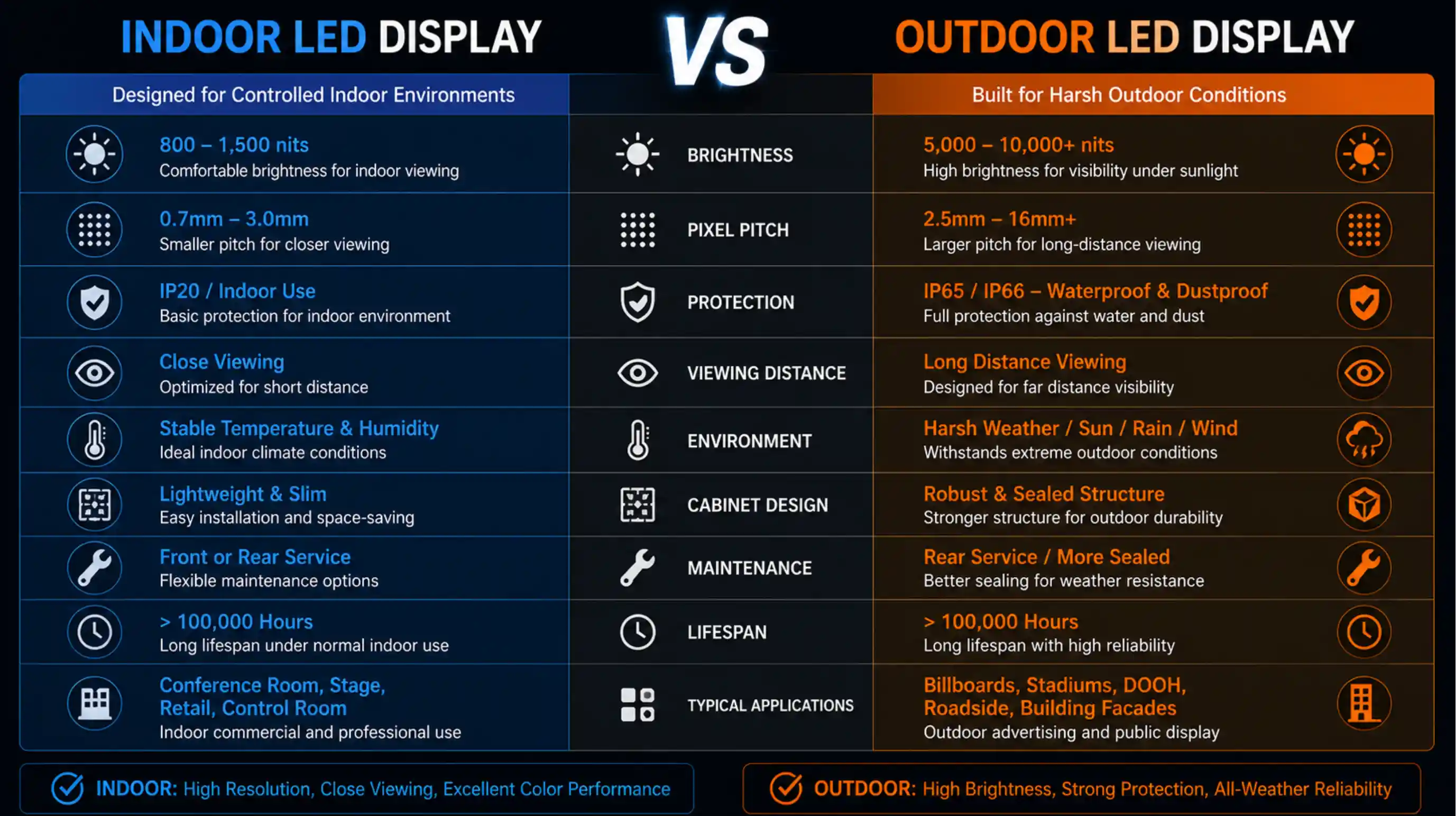
Why Outdoor Projects Are Much More Demanding
Outdoor LED systems must continuously operate under:
- sunlight
- rain
- wind
- humidity
- dust
- high temperature
This is why outdoor projects prioritize:
- waterproofing
- heat dissipation
- structural safety
- high brightness
Why Indoor Projects Focus More on Visual Quality
Indoor environments usually prioritize:
- close-viewing comfort
- fine image detail
- elegant appearance
- low noise operation
This is especially important in:
- conference rooms
- churches
- retail flagship stores
- museums
- XR studios
Why Brightness Standards Are Completely Different
Typical indoor brightness:
- 600–1200 nits
Typical outdoor brightness:
- 5500–10000 nits
Using outdoor brightness indoors may create:
- eye fatigue
- uncomfortable viewing
- excessive glare
DDW Engineer Notes
Many customers focus mainly on waterproof ratings when evaluating outdoor products.
However, in long-term operation environments, thermal management and ventilation are often much more important than waterproofing itself.